For the modern CTO, the journey into Generative AI follows a painfully predictable and often treacherous trajectory. It typically begins with a "Day Zero" moment of pure optimism: a three-week Proof of Concept (PoC) where a small, agile team of developers uses an OpenAI API key, a few hundred lines of Python, and perhaps a library like LangChain to build a chatbot that answers questions about internal documentation. The demo, presented in a high-res browser tab, is nothing short of spectacular. It handles nuanced queries, summarizes complex PDFs, and delights the executive suite with its sheer linguistic prowess. The board is immediately convinced that the organization is only weeks away from a transformative rollout that will redefine customer service or internal knowledge management.
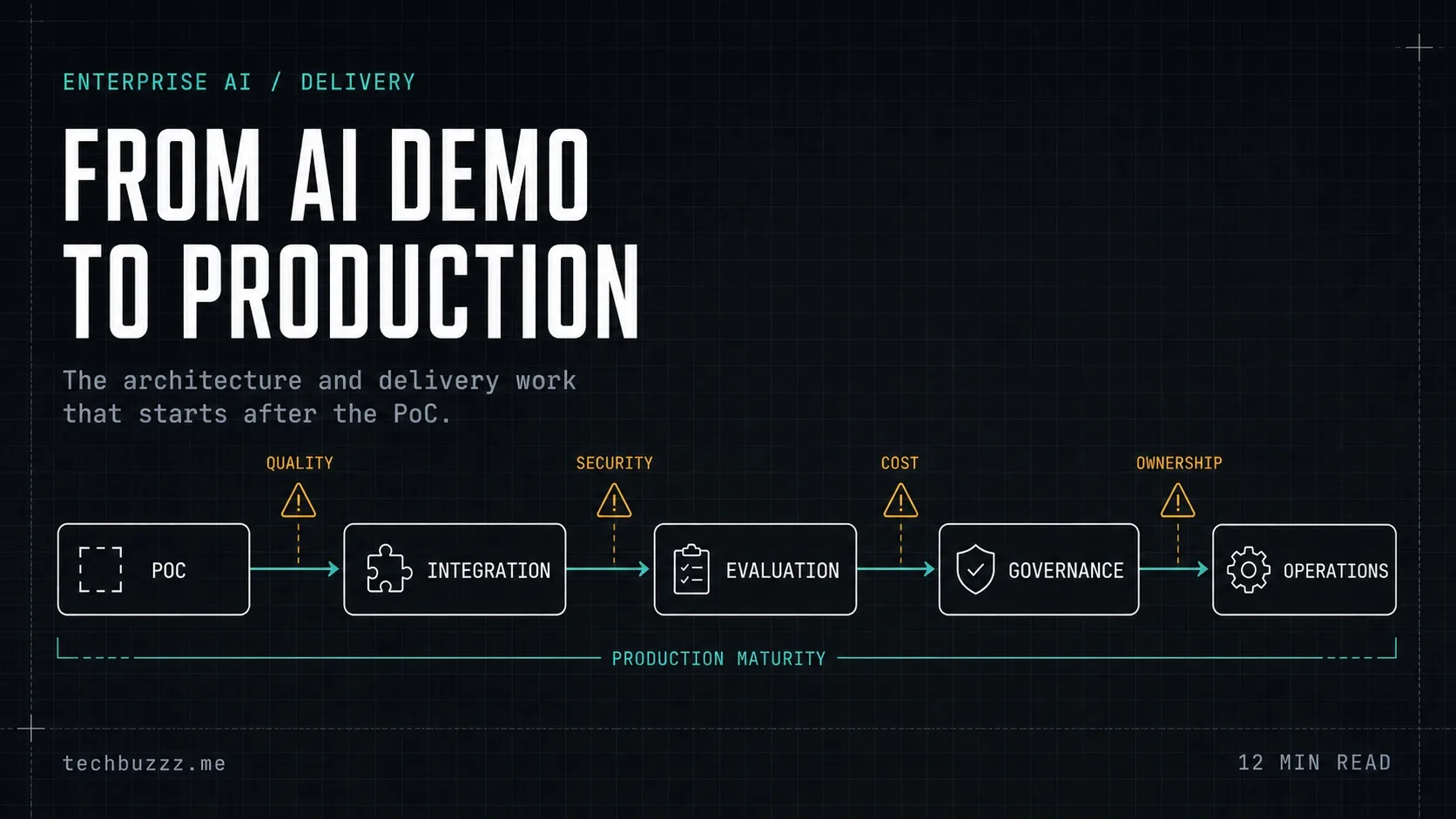
However, as the project moves toward "Day Two" — the governed production phase where real users, real data, and real SLA requirements collide — the initial momentum often evaporates. Six months after that "spectacular" demo, the system is frequently found languishing in a "limited internal beta" or, worse, a perpetual state of "architectural review." The latency is unacceptable for customer-facing applications, the token costs are unpredictable and ballooning, the security team has flagged thirteen critical vulnerabilities related to data leakage, and the output quality remains maddeningly inconsistent. This is the "Demo Trap." The gap between a working demo and a governed production system is not a technology problem; it is an architecture and delivery problem that most AI PoCs are not designed to expose. To bridge this chasm, engineering leadership must shift from a mindset of "experimentation" to one of "enterprise AI production readiness."
The Architectural Mirage: Beyond the Script
The fundamental error in most AI PoCs is the assumption that the core logic of a Large Language Model (LLM) application is the prompt itself. In an experimental environment, the prompt feels like the software — it is the engine of the experience. In reality, once you transition to a production environment, the prompt is perhaps 5% of the total system complexity. A PoC is typically built as a standalone script or a lightweight "wrapper" around a third-party API. It operates in a pristine vacuum, often using hardcoded credentials, static test data, and a single, unthrottled API key.
Production architecture requires the exact opposite. An enterprise system must be integrated into the existing, often messy, ecosystem of legacy databases, identity providers, and event buses. This transition is where the initial design often collapses under its own lack of foresight. In our own engagements, we keep seeing the same two patterns: teams that ship a synchronous chatbot directly behind the corporate SSO without rate limiting, and teams that move the entire vector index into a single Postgres table only to discover — weeks later — that re-embedding a 50,000-document corpus is a multi-day operation that has to be performed online. Both patterns are easy to anticipate in design review and almost impossible to retrofit in production.
In an enterprise context, "AI architecture" means building for high concurrency, low latency, and graceful failure. While a PoC handles one user at a time (often the developer themselves), a production system must handle hundreds or thousands of simultaneous requests while navigating the tiered rate limits of model providers like OpenAI, Anthropic, or Azure AI. This necessitates the implementation of robust queueing systems, circuit breakers, and sophisticated retry logic.
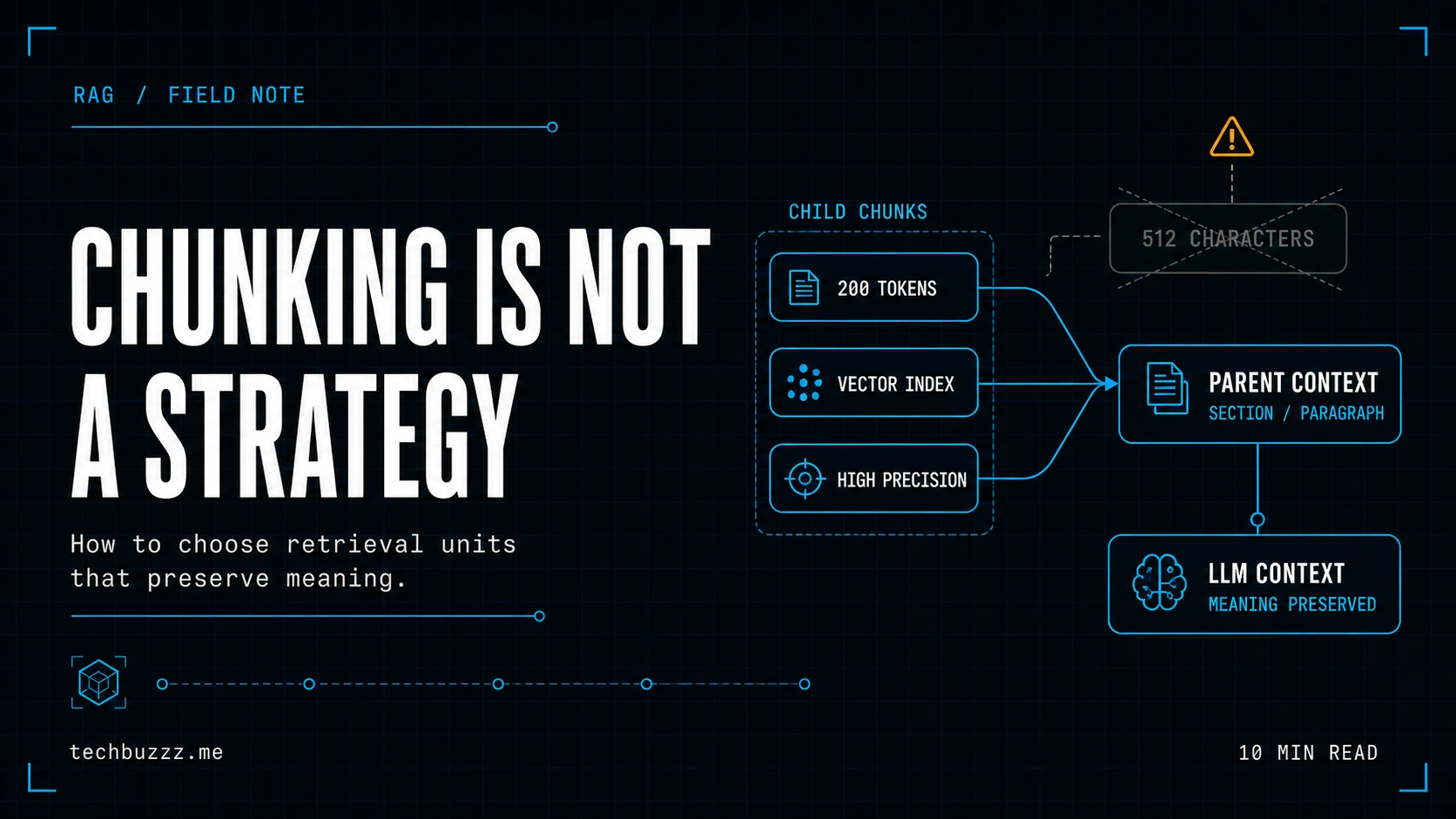
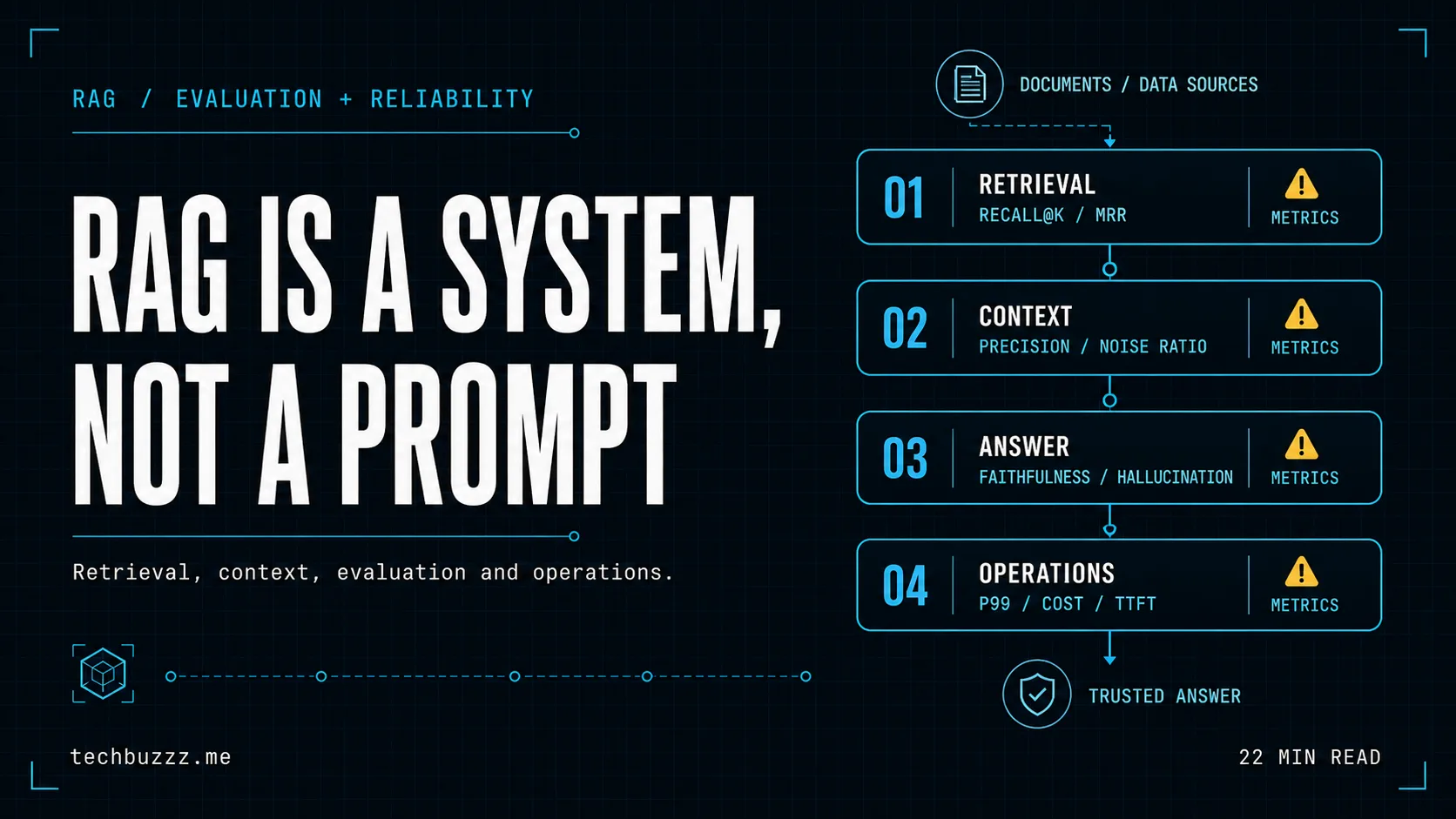
Furthermore, the Retrieval-Augmented Generation (RAG) pipeline, which looked so simple in the demo, becomes a nightmare of engineering complexity at scale. In a PoC, you might index 50 PDFs. In production, you are indexing 50,000 documents with varying levels of sensitivity, formatting quirks, and update frequencies. How do you handle document versioning? How do you re-rank search results from a vector database to ensure the most relevant context is passed to the LLM? How do you manage "chunking" strategies that don't break the semantic meaning of technical documents? Most PoCs simply use defaults, which fail immediately when faced with the density of real-world enterprise data.
The Reliability Crisis: From Vibes to Verification
In the PoC stage, evaluation is usually "vibes-based." A developer asks the bot five questions, likes the answers, and declares it "ready." This approach is a recipe for AI delivery failure. LLMs are non-deterministic by nature; a change in a single word of a system prompt, a change in the model's weights (even in minor provider updates), or a slight shift in how documents are indexed can cause a catastrophic regression in a seemingly unrelated part of the application.
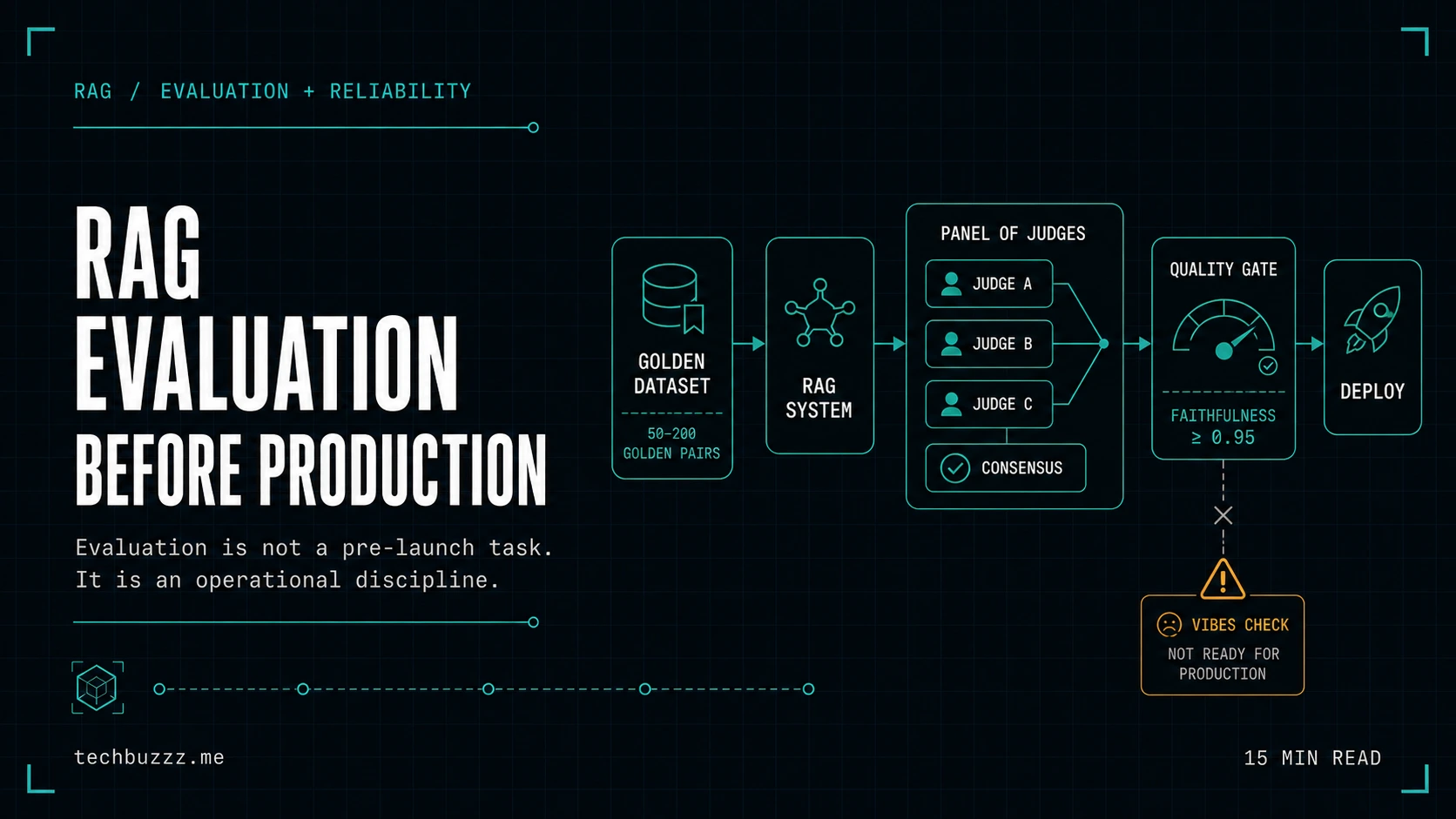
Enterprise-grade reliability requires moving from manual spot-checks to an automated "Evaluation Flywheel." This involves building a "Golden Dataset" — a curated set of hundreds or thousands of input-output pairs that represent the "ground truth" for your specific business use case. This dataset must be diverse, covering not just the "happy path" but also edge cases, nonsensical queries, and adversarial prompts designed to trigger hallucinations.
Every time a developer changes a line of code, updates a library, or tweaks a system prompt, a CI/CD pipeline should run the entire Golden Dataset through the model. But how do you grade the results at that scale? Human evaluation doesn't scale and is prone to its own biases. This is where "LLM-as-a-judge" patterns come in. By using a more powerful, "teacher" model (such as GPT-4o or Claude 3.5 Sonnet) to grade the output of a smaller, faster "student" production model based on specific, quantified rubrics — such as faithfulness (did the bot make it up?), relevancy (did it answer the question?), and PII leakage (did it reveal secrets?) — teams can finally attach a numerical reliability score to their AI. Without this rigorous evaluation framework, you aren't engineering; you are just guessing, and guessing in production is a liability.
Governance and the Security Perimeter
AI governance is often viewed by engineering teams as a bureaucratic hurdle or a "check-the-box" exercise for the legal department, but it is actually a core architectural requirement. In a PoC, the developers often have "superuser" permissions, and the system has unfettered access to the target data. In production, you face the reality of Role-Based Access Control (RBAC) and data sovereignty.
A common failure mode occurs when a user asks an AI to "summarize the last three months of payroll data for the engineering department." If the system retrieves that data and summarizes it for a junior developer who shouldn't have access to it, you have a major security breach. Most PoC architectures fail here because they treat the vector database as a flat, open file. Production-ready systems require "Identity-Aware Retrieval." Every document or "chunk" in the vector store must be tagged with its original Access Control Lists (ACLs). The retrieval logic must be modified to filter results based on the authenticated user's identity before the LLM ever sees a single word.
Furthermore, the security perimeter for LLMs is fundamentally different from traditional software. We are no longer just worried about SQL injection or cross-site scripting (XSS); we are worried about prompt injection. This is a new class of vulnerability where a malicious user — or even a malicious document ingested by the bot — takes control of the system's underlying instructions. A production-ready system requires an "Ingress/Egress Gateway" for prompts. This is a separate, hardened layer of logic that scans outgoing prompts for jailbreak attempts and scans incoming responses for toxicity, PII, or "hallucinated" URLs that could lead to phishing sites.
The Economics of Production: The Token Tax and Unit Economics
A successful PoC rarely considers cost because the volumes are low and the "wow factor" justifies a few hundred dollars in API spend. A production system, however, introduces the "Token Tax." In the enterprise, AI architecture enterprise design must account for the brutal reality of unit economics.
If your AI-powered feature costs $0.10 per query in API fees but saves a call center agent only $0.05 worth of time or resource, the project is a financial failure regardless of its technical brilliance. Production readiness involves optimizing for the "Cost-to-Intelligence Ratio." This is achieved through a multi-layered strategy:
- Semantic Caching: Many enterprise queries are repetitive. By storing common queries and their embeddings in a high-performance cache (like Redis), the system can serve a previous response without triggering an expensive LLM call, reducing both latency and cost.
- Model Routing and Orchestration: Not every query requires a "frontier" model like GPT-4. A production system should use a router to send simple classification tasks to a cheap, fast model (like GPT-4o-mini or a local Llama-3-8B instance) while reserving the flagship models for complex reasoning.
- Model Distillation: For specific, repetitive tasks — like extracting data from invoices — enterprise teams can use a large model to "teach" a smaller, task-specific model through fine-tuning on synthetic data. This can reduce token costs by 90% while maintaining accuracy.
- Context Window Management: LLM costs are often proportional to the amount of context provided. Production systems need "Context Pruning" techniques to ensure only the most relevant tokens are sent to the model, rather than dumping entire documents into the window.
Financial observability is critical. CTOs need more than just a monthly bill from a cloud provider; they need a dashboard that shows token spend per department, per user, and per specific feature. Without this granular data, you cannot calculate ROI, and without ROI, the project will be the first thing cut during the next budget cycle.
The Organizational Shift: Who Owns the AI?
Perhaps the greatest, and most overlooked, barrier to moving from PoC to production is the "Ownership Void." PoCs are often owned by "AI Labs," "Emerging Tech" groups, or "Digital Transformation" teams. These groups are excellent at rapid prototyping and staying on the cutting edge of research, but they often lack the operational muscle, the paging rotations, and the "five-nines" mindset of SRE (Site Reliability Engineering) or Platform Engineering teams.
When the LLM provider changes its API version at 3:00 AM on a Sunday, who gets the alert? If the model begins to drift and starts hallucinating incorrect or legally precarious advice, who has the authority to pull the "kill switch"?
Enterprise AI production readiness requires a fundamental transition of ownership. The AI Lab should provide the "What" — the model selection, the initial prompt engineering, and the RAG strategy. However, the Platform Engineering team must provide the "How" — the scalable infrastructure, the security monitoring, the data pipelines, and the deployment frameworks.
This means treating LLM-based applications like any other business-critical microservice. They need health checks that go beyond "is the server up?" to "is the model still accurate?". They need structured logging, distributed tracing (using standards like OpenTelemetry), and robust versioning. You wouldn't ship a mission-critical database without a backup and disaster recovery plan; you shouldn't ship an LLM application without a prompt registry, a model-fallback strategy, and a clear incident response plan for "algorithmic failure."
Artifact: PoC-Sufficient vs. Production-Required Design
To help CTOs and VP Engineering leaders visualize the "Day Two" gap, the following table contrasts the convenient shortcuts taken during the experimentation phase with the non-negotiable requirements of a governed, scalable enterprise system.
| Dimension | PoC-Sufficient Design | Production-Required Design |
|---|---|---|
| Integration | Hardcoded API keys; direct, synchronous calls; single environment. | Managed secrets (Vault/KMS); async processing with message queues; multi-region failover. |
| Reliability | "Vibes-based" manual spot-checks by developers. | Automated regression suites with "Golden Datasets" integrated into CI/CD pipelines. |
| Evaluation | Ad-hoc human feedback and "thumbs up/down" buttons. | LLM-as-a-judge patterns using flagship models to score production models on specific metrics (faithfulness, relevancy). |
| Security | Open system prompt; broad data access; no input/output filtering. | Prompt injection firewalls; RBAC-integrated RAG pipelines; PII scrubbing; audit trails for all model interactions. |
| Observability | Console logs and basic monthly API usage statistics. | Distributed tracing (OpenTelemetry); prompt versioning; latency histograms; hallucination detection alerts. |
| Cost Model | Undefined or experimental; paid via team credit card. | Semantic caching; intelligent model routing; unit-economic monitoring and cost-capping per feature/user. |
| Team Ownership | AI Research Lab or individual developers in a silo. | DevSecOps shared responsibility model; SRE-owned uptime, scaling, and incident response. |
| Change Management | Direct edits to the system prompt in the source code. | Prompt Registry with semantic versioning, automated A/B testing, and canary rollouts. |
Conclusion: The Path to Day Two
The transition from a working AI demo to a governed production system is the defining engineering challenge of the current era. The "wow factor" of Generative AI has lowered the barrier to entry for PoCs to an unprecedented degree, but this ease of entry creates a dangerous illusion of simplicity.
Bridging the gap requires a return to first principles: rigorous engineering, disciplined architecture, and clear-eyed economic analysis. If you cannot measure the quality of your AI's output in a repeatable, quantified way, you cannot improve it. If you cannot control the data flowing into it based on existing corporate policies, you cannot secure it. And if you cannot predict the cost and ROI of running it at scale, you cannot sustain it.
The successful CTO is the one who recognizes that the LLM is not a magic black box that operates by its own rules, but a new, highly volatile, and powerful component in an existing enterprise stack. Treating it with the same skepticism, engineering rigor, and operational discipline as a new core database or a critical legacy system integration is the only way to move past the demo and into the value-generating reality of enterprise AI at scale.
Discuss an enterprise AI architecture or delivery challenge → techbuzzz.me.